
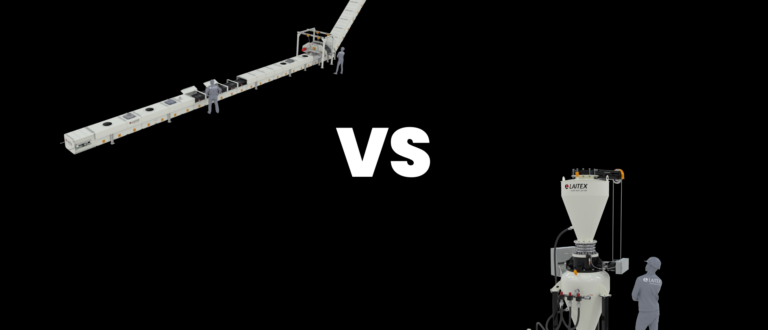
When buyers ask which, companies can handle both mechanical and pneumatic conveying in one integrated package, they are really asking a more important question:
Who can choose the right conveying method for each part of the plant instead of forcing everything into one technology?
That matters because there is no universal winner. Mechanical conveying is often the better choice for high-capacity, energy-efficient bulk transport. Pneumatic conveying can be the better fit where dust control, tight routing, or enclosed transfer is the priority. In many plants, the best answer is hybrid. That is, using mechanical conveying for the main flow and pneumatic conveying where it adds the most value.
Laitex can support both mechanical and pneumatic conveying options. That matters most in plants where layout, material behavior, and operating goals do not fit a one-technology solution.
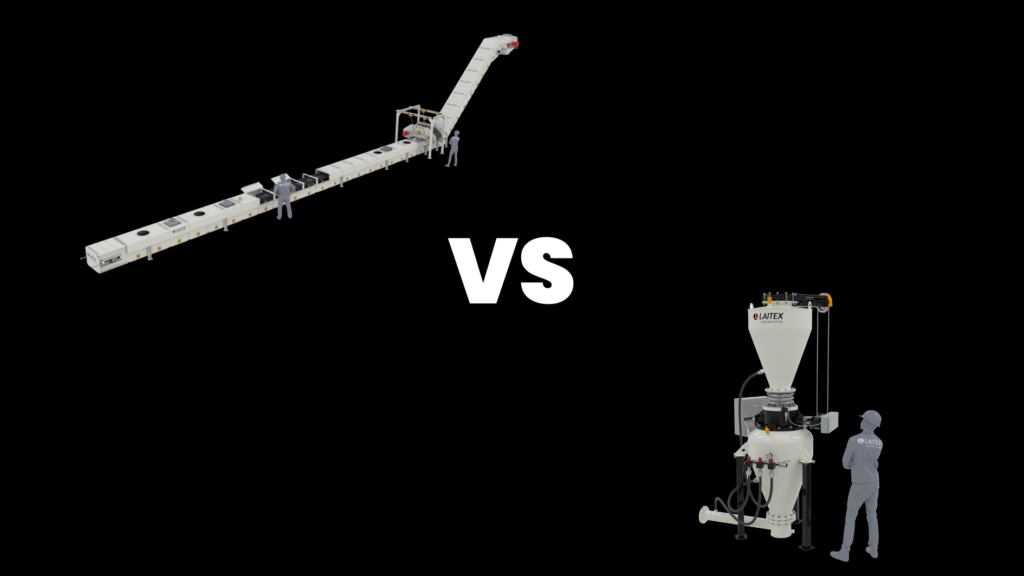
When mechanical conveying is usually the better fit?
Mechanical conveying is often the strongest choice when the plant handles high volumes, abrasive materials, or larger particles and wants lower operating cost over time. It is also a good fit when the route is relatively clear. In addition, the system needs to be robust, simple to maintain, and energy-efficient.
For many bulk material plants, mechanical conveying is the backbone of the process.
When pneumatic conveying is usually the better fit?
Pneumatic conveying becomes attractive when enclosed transfer, dust control, or routing flexibility matters most. It can be a strong solution for powders or fines. Also, it works well for plant areas where conventional conveyors are difficult to fit because of existing structures, elevation changes, or limited space.
It is not automatically the lowest-cost option. However, in the right layout it can solve problems mechanical conveying cannot solve as cleanly.
Why hybrid systems are often the smartest answer?
Many plants do not need to choose one technology for the entire flow.
A hybrid solution may use mechanical conveying for reception, reclaim, and main transport, then pneumatic conveying for selected transfer points, injection, dosing, fines handling, or hard-to-route sections. This can improve layout flexibility. Also, it achieves this without pushing the full system into higher pneumatic CAPEX and OPEX.
That is usually where an integrated engineering partner creates the most value: choosing the best method by section, not by habit.
Why this matters for buyers?
Choosing between mechanical, pneumatic, and hybrid conveying should not start with supplier preference. It should start with the material, the route, the plant layout, the dust requirement, and the operating economics.
The right partner is the one that can evaluate all of those factors honestly. They will recommend the best fit, even when that means a mixed approach.
For plants with custom layouts, brownfield constraints, difficult materials, or both mechanical and pneumatic needs in the same scope, that flexibility reduces interface risk. Usually, it leads to a better long-term result.
Looking at both mechanical and pneumatic conveying for the same plant?
Talk to Laitex about choosing the right mix for your layout, material, and lifecycle cost targets. And we make sure Flow Must Go On.