
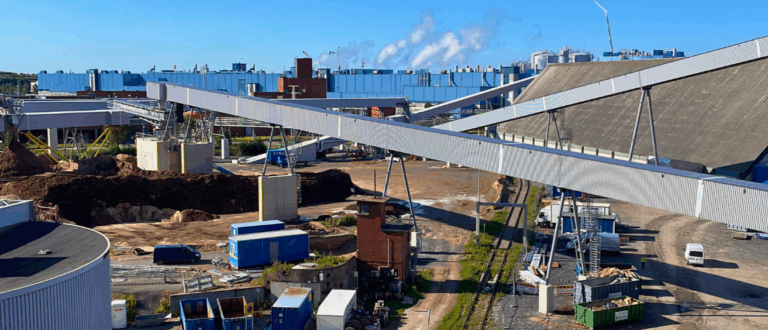
Flow Must Go On
Industrial processes depend on flow.
Fuel must reach the boiler. Raw materials must reach production. Recycled materials must move through recovery processes. Minerals must travel from extraction to processing. Biomass must feed energy generation. Ash must leave the process safely and efficiently.
When material flow stops, production suffers. Downtime increases. Costs rise. Sustainability targets become harder to achieve.
Therefore, reliable bulk material handling is one of the most important foundations of modern industry.
At Laitex, we design, manufacture, modernize and maintain bulk material handling solutions for demanding industrial environments. Our solutions help customers move materials safely, efficiently and sustainably throughout the entire lifecycle of their operations.
From individual conveyors to complete turn-key systems, we focus on one objective:
Keeping material flowing and keeping the promise: Flow Must Go On.
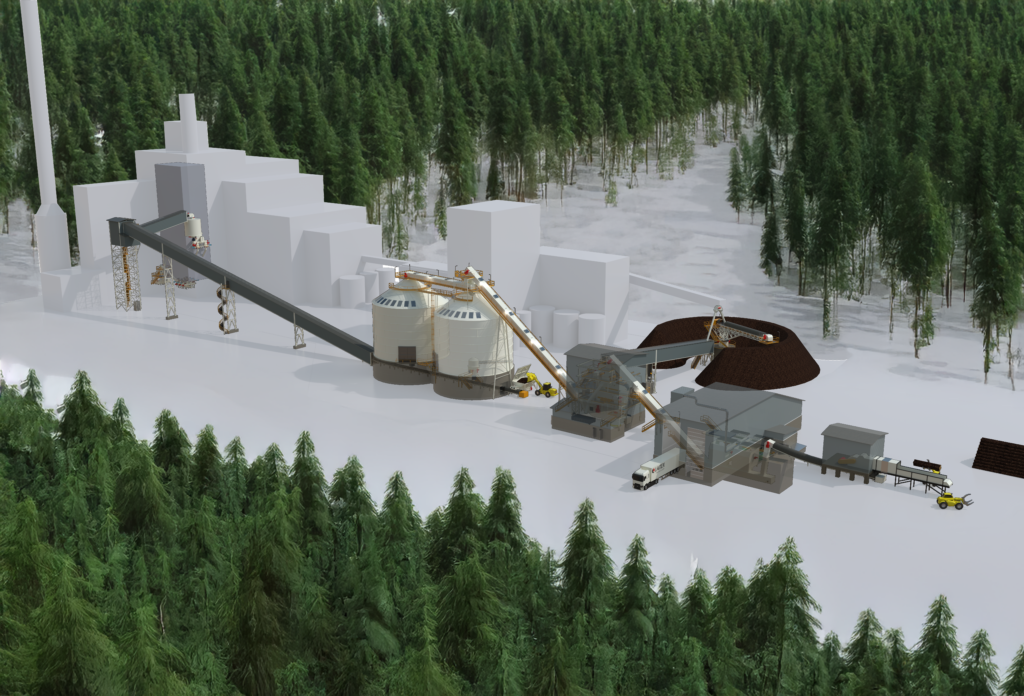
What Is Bulk Material Handling?
Material handling refers to the transportation, storage, feeding, discharging, elevating, cooling, screening and processing of loose materials throughout an industrial process.
Unlike packaged products, bulk materials move in large quantities. These materials often present significant challenges because they may be abrasive, dusty, sticky, wet, hot, corrosive or difficult to control.
As a result, successful bulk material handling requires more than equipment alone. It requires a deep understanding of material behavior, process requirements and long-term operational performance.
Modern bulk material handling systems help industries:
- Increase operational reliability
- Improve production efficiency
- Reduce downtime
- Enhance workplace safety
- Lower maintenance costs
- Improve environmental performance
- Support sustainability goals
- Extend equipment lifetime
Consequently, bulk material handling directly impacts both operational success and business performance.
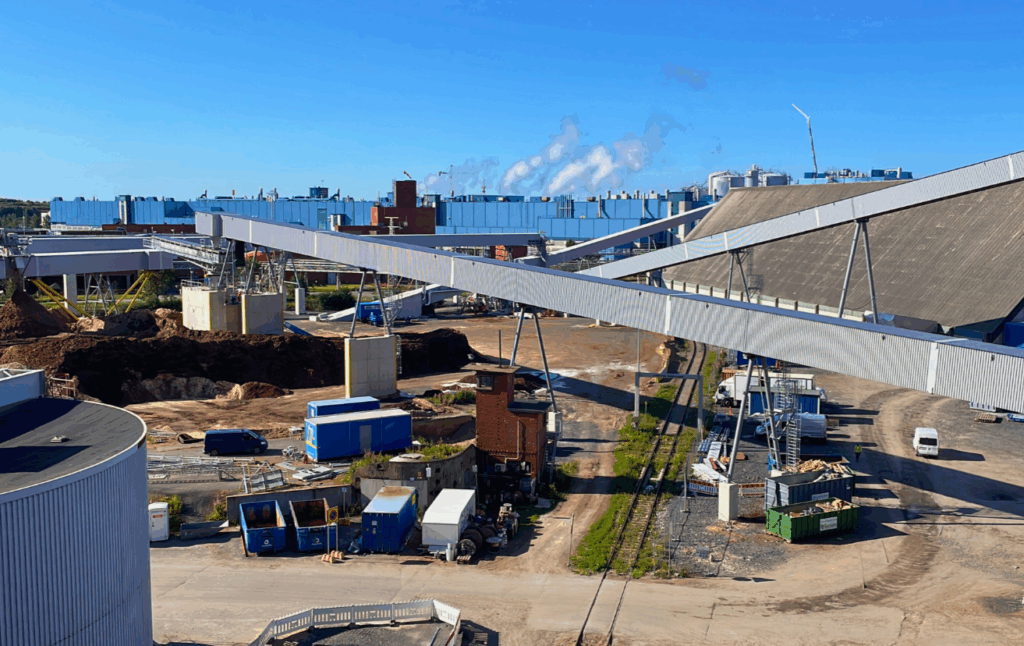
Why Reliable Material Handling Matters
Every industrial facility depends on continuous flow.
For example, a power plant cannot generate energy without fuel feeding systems. Likewise, a mining operation cannot process ore without reliable conveying systems. Similarly, recycling facilities depend on controlled material movement to maximize resource recovery.
When material handling systems operate efficiently, plants benefit from:
Higher Plant Availability
Reliable equipment reduces interruptions and supports continuous production.
Improved Safety
Well-designed systems minimize manual handling, reduce dust exposure and create safer working environments.
Lower Operating Costs
Efficient equipment consumes less energy, requires fewer repairs and reduces unexpected maintenance.
Better Environmental Performance
Modern systems improve dust control, reduce material losses and support more sustainable operations.
Greater Process Stability
Consistent material flow improves process control and helps operators achieve predictable results.
Ultimately, reliable material handling supports productivity, profitability and sustainability at the same time.
Bulk Material Handling Equipment
Every process has unique requirements. Therefore, selecting the right equipment starts with understanding the material, operating conditions and production goals.
Belt Conveyors
Belt conveyors provide one of the most versatile and efficient methods for transporting bulk materials.
Industries use belt conveyors because they handle large capacities while maintaining continuous, reliable operation.
Laitex designs heavy-duty belt conveyors for demanding applications including:
- Biomass handling
- Mining operations
- Mineral processing
- Ash handling
- Sand conveying
- Cement plants
- Industrial manufacturing
Furthermore, our conveyor systems adapt to different capacities, distances and environmental conditions.
Sidewall Belt Conveyors
Space constraints often create challenges within industrial facilities.
Therefore, sidewall belt conveyors offer an effective solution for steep or vertical conveying applications.
These systems allow facilities to:
- Save valuable floor space
- Reduce transfer points
- Simplify plant layouts
- Improve conveying efficiency
As a result, sidewall conveyors provide significant advantages where traditional conveyor arrangements become impractical.
Chain Conveyors
Many industrial applications demand robust equipment capable of handling difficult materials.
Chain conveyors excel in these environments.
Their enclosed structure, high durability and flexible configuration make them suitable for:
- Biomass fuels
- Bottom ash
- Industrial minerals
- Recycled materials
- Hot materials
- Abrasive materials
Moreover, chain conveyors support multiple inlet and discharge points while maintaining reliable operation.
Screw Conveyors
Screw conveyors offer an economical solution for short-distance conveying and controlled feeding applications.
These systems perform particularly well when handling:
- Fly ash
- Sand
- Limestone
- Lime
- Wood chips
- Bark
- Sawdust
- Sludge
- Cement
In addition, screw conveyors can combine conveying, feeding and dosing functions within a single piece of equipment.
Bucket Elevators
Many industrial processes require vertical transportation.
Bucket elevators provide a highly efficient method for lifting bulk materials to elevated process stages.
Typical applications include:
- Storage systems
- Processing facilities
- Material transfer towers
- Mining operations
- Cement plants
- Biomass facilities
Consequently, bucket elevators often reduce the footprint required for vertical material movement.
Pneumatic Conveying Systems
Certain materials require enclosed transportation to minimize dust and contamination.
Pneumatic conveying systems move fine materials through pipelines using airflow.
Common applications include:
- Fly ash conveying
- Activated carbon handling
- Lime transportation
- Cement conveying
- Sulphur handling
Furthermore, pneumatic systems offer excellent flexibility when routing materials through complex facilities.
Cooling Systems
Some materials leave industrial processes at extremely high temperatures.
Therefore, cooling equipment becomes essential for both safety and operational reliability.
Laitex cooling conveying solutions help facilities:
- Protect downstream equipment
- Improve handling conditions
- Enhance process safety
- Maintain continuous operation
As a result, customers achieve more stable and reliable process performance.
Rotary Feeders
Material flow requires precision.
Rotary feeders regulate material movement between process stages while maintaining controlled feeding rates.
Additionally, they provide airlock functionality in many pneumatic conveying applications.
Silos, Bins and Storage Systems
Storage systems (silos, bins, storage systems and storage dischargers) play a critical role in balancing process fluctuations.
However, successful storage requires more than simply adding volume.
Material flow behavior must be considered carefully to prevent:
- Bridging
- Ratholing
- Material segregation
- Flow interruptions
Therefore, Laitex designs storage solutions according to the unique characteristics of each material.
Screening and Separation Systems
Material quality directly affects process performance.
Screening systems remove unwanted particles and improve material consistency.
Consequently, downstream equipment operates more efficiently and reliably.
Crushers
Many industrial processes require specific particle sizes.
Crushers reduce oversized materials and improve process efficiency.
As a result, facilities achieve better conveying performance, improved combustion and more stable production.
Materials We Handle
Every bulk material behaves differently.
Some materials generate dust. Others absorb moisture. Certain materials become abrasive, while others remain fragile and sensitive to degradation.
Because material behavior varies significantly, successful solutions require material-specific engineering.
Laitex designs systems for materials including:
- Biomass
- Wood chips
- Bark
- Sawdust
- Pellets
- Agricultural materials
- Peat
- Ash
- Fly ash
- Bottom ash
- Sand
- Lime
- Limestone
- Cement
- Coal
- Sulphur
- Activated carbon
- Sludge
- Industrial minerals
- Crushed ore
- Tailings
- Recycled materials
- Renewable raw materials
and more.
Moreover, we continuously develop solutions for emerging materials within circular economy and energy transition industries.
Industries We Serve
Power and Heat
The energy sector faces increasing pressure to improve sustainability while maintaining reliability.
Consequently, power plants require efficient fuel handling, ash management and material recycling systems.
Our solutions support:
- Biomass power plants
- Combined heat and power plants
- Waste-to-energy facilities
- Industrial energy production
Applications include:
- Fuel receiving
- Fuel storage
- Boiler feeding
- Ash handling
- Sand circulation
- Pneumatic conveying
Metals, Minerals and Mining
Mining operations demand equipment capable of handling abrasive materials under challenging conditions.
Therefore, durability and reliability remain critical design priorities.
Laitex solutions support:
- Concentrators
- Mineral processing plants
- Metals refining
- Tailings facilities
- Battery material production
Furthermore, our systems help customers improve operational efficiency while supporting responsible resource utilization.
Circular Economy and Environmental Technologies
The transition toward a circular economy creates new material handling challenges.
Facilities increasingly process recycled, recovered and renewable materials.
As a result, operators need flexible systems capable of handling evolving material streams.
Typical applications include:
- Recycling facilities
- Sludge treatment plants
- Activated carbon systems
- Biochar production
- Waste recovery facilities
- Environmental process plants
and more
Pulp and Paper
Pulp and paper production relies on continuous material flow.
Conveying systems, storage solutions and feeding equipment play essential roles throughout the process.
Our expertise supports:
- Wood handling
- Biomass systems
- Recovery boiler operations
- Lime processing
- Material recycling
- Environmental systems
How We Design Bulk Material Handling Systems
Successful projects begin long before equipment selection.
First, we analyze the material. Next, we evaluate the process. Then, we optimize the complete system. This approach allows us to create solutions that perform reliably throughout their lifecycle.
Material Analysis
We evaluate:
- Bulk density
- Moisture content
- Particle size
- Temperature
- Abrasiveness
- Corrosiveness
- Flowability
- Dust generation
- Fragility
Process Analysis
We examine:
- Capacity requirements
- Operating schedules
- Material flow paths
- Feeding accuracy
- Transfer points
- Automation needs
Site Analysis
We also assess:
- Available space
- Existing infrastructure
- Maintenance access
- Safety requirements
- Environmental conditions
- Future expansion plans
The final solution aligns with both current and future operational needs.
Sustainability Through Better Material Handling
Sustainability begins with efficient processes.
When material handling systems operate effectively, facilities reduce waste, lower energy consumption and improve resource utilization.
Therefore, modern material handling contributes directly to sustainability goals.
Laitex supports sustainability through:
- Energy-efficient equipment
- Durable engineering solutions
- Long equipment lifecycles
- Reduced material losses
- Dust control technologies
- Resource recovery applications
- Circular economy projects
Moreover, our customers use these solutions to reduce environmental impact while maintaining operational performance.
Turn-Key Bulk Material Handling Systems
Many industrial projects require more than individual equipment deliveries.
Therefore, Laitex provides complete turn-key material handling systems.
These systems may include:
- Receiving stations
- Conveyors
- Elevators
- Feeders
- Silos
- Storage systems
- Crushers
- Screening equipment
- Pneumatic conveying
- Cooling systems
- Automation solutions
Because one supplier manages the entire system, customers benefit from simpler project execution and reduced interface risks.
Lifecycle Services That Keep Operations Moving
Installing equipment marks the beginning of the journey, not the end.
Industrial facilities operate for decades. Therefore, long-term reliability requires continuous support.
Laitex lifecycle services include:
- Inspections
- Preventive maintenance
- Spare parts
- Modernizations
- Upgrades
- Technical support
- Performance improvements
As a result, customers improve availability, reduce downtime and maximize return on investment.
OEM Spare Parts
Reliable equipment depends on reliable components.
Therefore, Laitex supplies OEM spare parts designed specifically for our equipment and systems.
Our spare parts services help customers:
- Reduce downtime
- Improve reliability
- Extend equipment life
- Improve maintenance planning
Consequently, operations remain productive even in demanding environments.
Modernization and Upgrades
Industrial facilities constantly evolve.
Production targets increase. Regulations change. Sustainability expectations grow.
Therefore, modernization often provides a cost-effective alternative to complete replacement.
Laitex modernization projects improve:
- Capacity
- Safety
- Reliability
- Energy efficiency
- Dust control
- Maintainability
As a result, existing assets continue delivering value for years to come.
Why Choose Laitex?
Many companies manufacture equipment.
However, successful material handling requires more than equipment alone.
It requires expertise, commitment and a willingness to solve complex challenges.
Customers choose Laitex because we combine:
- Engineering expertise
- Industrial experience
- Flexible cooperation
- Lifecycle support
- Sustainability focus
- Reliable project execution
- Practical problem solving
Most importantly, we understand the importance of uninterrupted material flow.
We do not simply deliver equipment.
We help customers keep operations moving.
Frequently Asked Questions
What is a bulk material handling system?
A bulk material handling system transports, stores, feeds, discharges, elevates, cools or processes loose materials within industrial operations.
What industries use bulk material handling equipment?
Industries including power generation, mining, minerals processing, circular economy, environmental technology, cement, chemicals and pulp and paper rely on bulk material handling systems.
What materials can bulk material handling equipment handle?
Systems can handle biomass, ash, sand, lime, limestone, cement, sludge, activated carbon, industrial minerals, ores, tailings and many other bulk materials.
How do I choose the right conveyor?
The right conveyor depends on material properties, capacity, distance, plant layout, maintenance requirements and operating conditions.
Why are lifecycle services important?
Lifecycle services improve equipment reliability, reduce downtime, extend asset life and support long-term operational performance.
Can existing material handling systems be upgraded?
Yes. Modernization projects often improve capacity, safety, efficiency and sustainability while extending equipment life.
Keep Your Material Flow Moving
Reliable material handling supports every stage of industrial production.
Whether you operate a power plant, mining facility, recycling operation or process industry, material flow remains critical to success.
At Laitex, we combine engineering expertise, industrial experience and lifecycle support to create solutions that perform today and continue delivering value tomorrow.
Because production cannot stop, progress cannot stop, sustainability cannot stop.
Flow Must Go On.